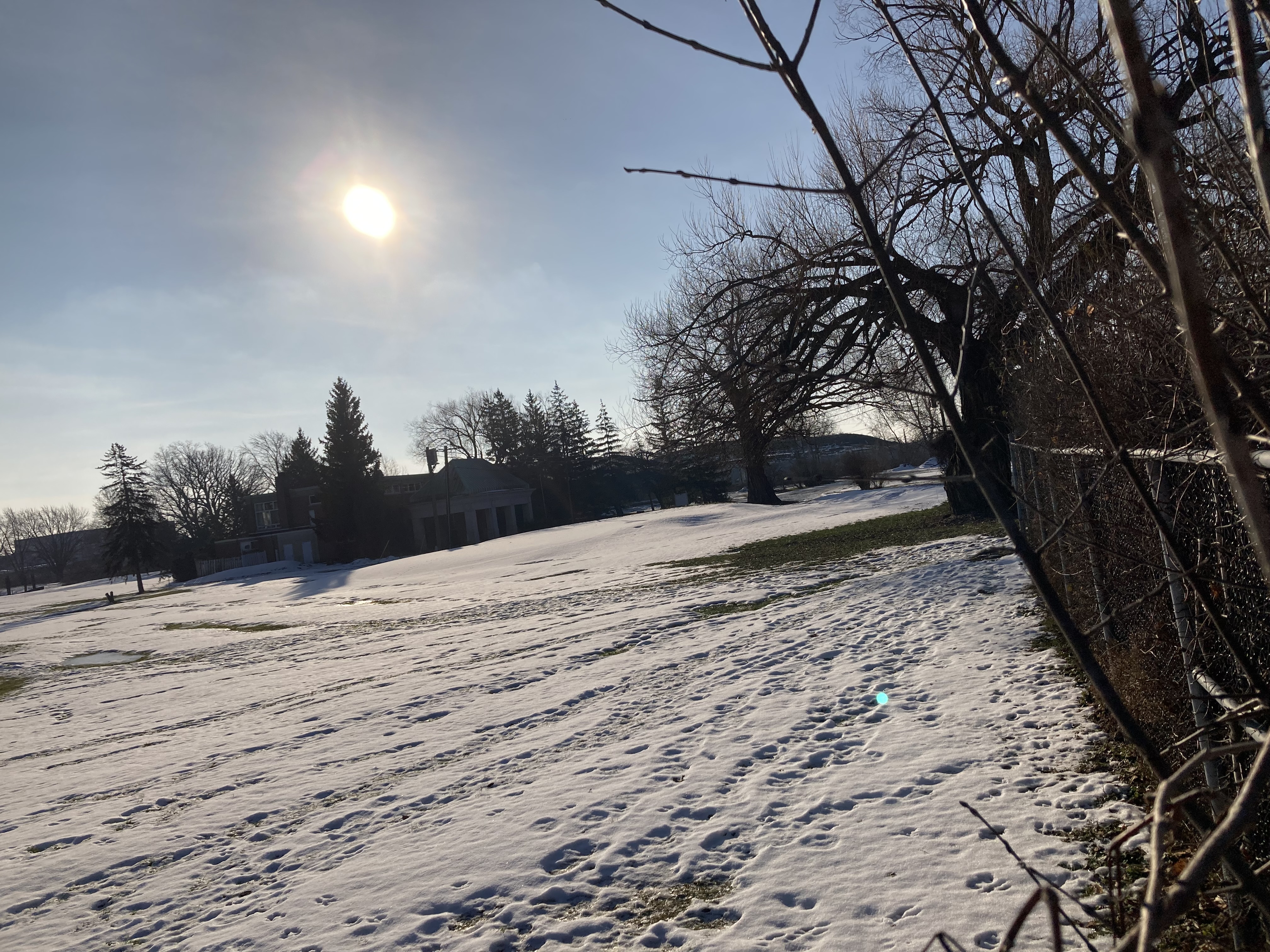
My cousin Bob suggested leaving some carrots near the pile of branches at the back of the garden, maybe the rabbit would show up and we'd see if this was his home. And that is what happened, the rabbit appeared and now he sits in front of his home. The days are getting longer, over an hour longer since early January, and spring seems to be on its way. This has been the coldest and snowiest winter that I can remember, everyday it seems to be -12 C but "feels like" (with the wind chill) -22 C. We'll all be glad when this winter is over. We wait and wait and then we have a single mild day and think we've turned the corner but we haven't, it's -9 C right now (on February 21st) and we had more snow last night. Oh well, I am enjoying seeing the rabbit and leaving him a few pieces of carrot everyday. It's a small reprieve from the relentless and unpleasant winter we're having. But the rabbit is thriving, it's like the country out there even though we live in the city, less than twenty minutes from the downtown; there is a considerable amount of green space in parts of the city, not just parks but people's backyards. When I was growing up here you'd never see any urban wildlife, now we share our environment with rabbits, racoons, skunks, groundhogs, the ubiquitous squirrels, many different types of birds but notably cardinals who I hear singing every morning, and chickadees. There are fewer insects, we are destroying monarch butterflies and other insects. Most of what used to be nature, abandoned farmers' fields, they have all been built on and so we're all in this together, urban wildlife has had to move into the urban sprawl that is city if they want to survive. As Joni Mitchell sang, “We’ve paved paradise and put up a parking lot.” That is exactly what we have done. Above are some photographs and a 13 second video of the rabbit.
And then for my afternoon walks I have a garden, larger than any artificial garden that I have read of and far more attractive to me, -- mile after mile of embowered walks, such as no nobleman's grounds can boast, with animals running free and wild therein as from the first, -- varied with land and water prospect, and, above all, so retired that it is extremely rare that I meet a single wanderer in its mazes. No gardener is seen therein, no gates...You may wander away to solitary bowers and brooks and hills.
—Henry David Thoreau, "Journal", 20 June 1850.
I long for wildness, a nature which I cannot put my foot through, woods where the wood thrush forever sings, where the hours are early morning ones, and there is dew on the grass, and the day is forever unproved, where I might have a fertile unknown for a soil about me.
—Henry David Thoreau, "Journal", 22 June 1853
A man is not to be measured by the virtue of his described actions or the wisdom of his expressed thoughts merely, but by that free character he is, and is felt to be, under all circumstances. — Henry David Thoreau, "Sir Walter Raleigh"
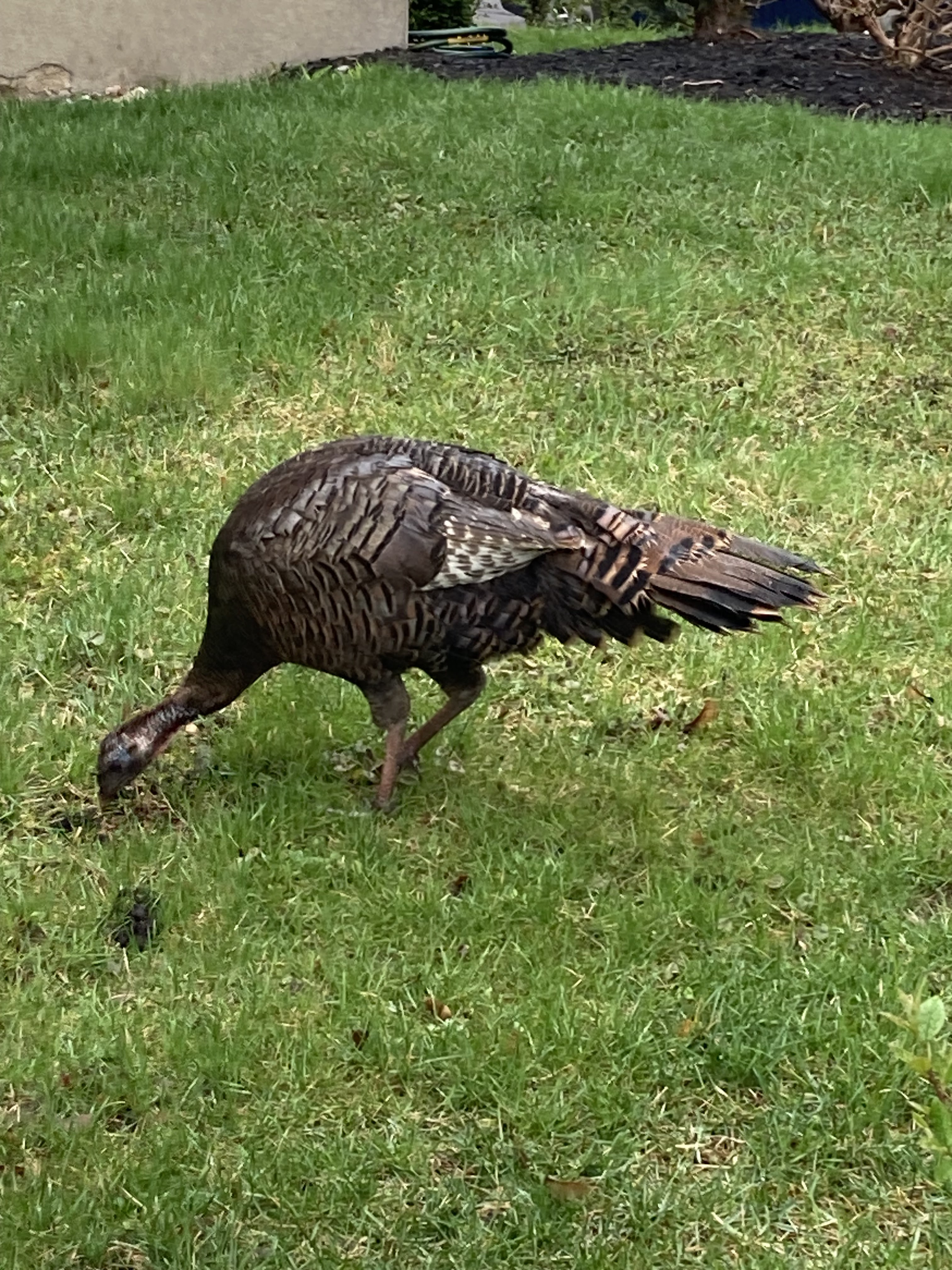
Somewhere on the West Island of Montreal beavers have returned and are bothering the local people with their behaviour, they are felling trees along the shore and the earth is being eroded there. It is not so much that nature is returning but that the natural habitat for wildlife is being invaded by people and the wildlife has nowhere to go but to live among us. It’s not so bad, food is plentiful, and the animals get used to eating what we discard. The other night, it was 4 a.m., our spotlight in the rear of the house went on and I saw a big fat raccoon walk by the basement window not three feet from where I was standing. Other visitors include skunks, rabbits, ground hogs, and many types of birds I rarely saw even five years ago; for instance, many cardinals, juncos, and other birds. I never saw any wildlife when I was growing up in this neighbourhood, on Oxford Avenue, that’s because only a few blocks away there were a few fields where animals and birds could still live. Or these animals that we didn’t see in the past are now among us, moved in from the surrounding countryside, because the off-island land is being developed. These fields that were in this neighbourhood are long gone, condos, apartment buildings, and duplexes were constructed there years ago. As another example, rue Norman (in Lachine, parallel to Highway 20) used to be wide-open fields, some of it formerly used for agriculture, now it’s an industrial zone and made up of garages, trucks, and various companies.